Seeding & Sod
Starting a New Lawn From Seed, Start to Finish
Learn how to plant grass seed the right way—soil prep, seeding rates, watering schedules, and first-mow timing for a new lawn that actually fills in.

Starting a lawn from scratch sounds complicated, but the process follows a logical sequence: clear and grade the area, loosen and amend the soil, spread seed at the right rate, then keep the seedbed consistently moist until the grass is established. Get those four things right and you'll have a dense, healthy stand within a few weeks. Rush any of them and you'll be patching thin spots all season.
Timing and Grass Type
Choosing the right seed and the right moment to plant it matters more than almost anything else. Grass falls into two broad camps, and each has its own planting window.
Cool-season grasses (Kentucky bluegrass, tall fescue, perennial ryegrass) germinate best when soil temperatures run between 50°F and 65°F. That window typically lines up with late summer to early fall in northern regions, or a shorter window in early spring. Fall is generally the better bet: soil is warm from summer, weed competition drops off, and the grass has months to root before it faces summer heat. See cool-season vs. warm-season grass for a full comparison if you're not sure which type suits your yard.
Warm-season grasses (Bermuda, Zoysia, centipede, St. Augustine seeded varieties) need soil temperatures above 65°F, ideally 70°F or higher. Plant them in late spring through early summer, once nighttime temperatures have stabilized. Planting too early in cool soil leads to slow, uneven germination and heavy weed pressure.
Check a local extension service forecast or use a soil thermometer, a few inches down, before you commit to a planting date.
Preparing the Soil
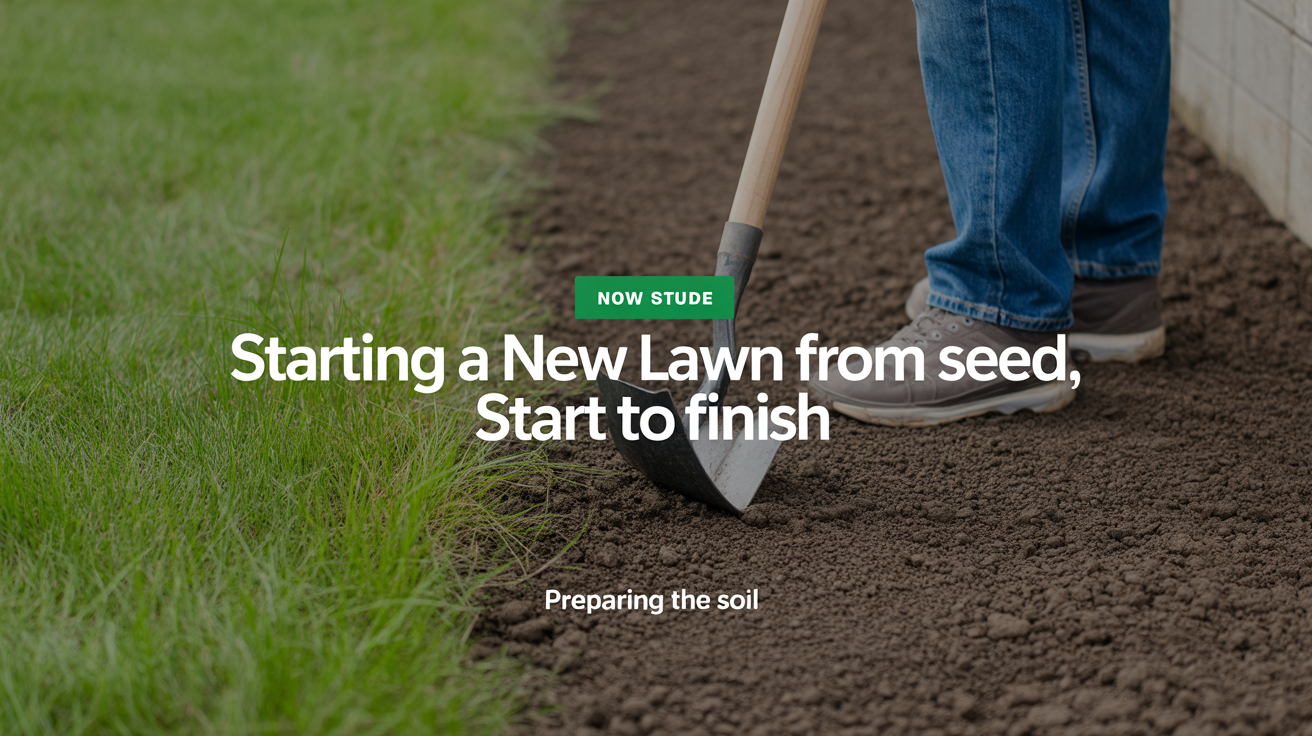
This is the step most people underinvest in. A seed sitting on compacted, weed-infested, or nutrient-depleted soil will struggle no matter how good the seed itself is.
Clear the area. Kill existing vegetation first. A non-selective herbicide takes 7–14 days to work; a second application may be needed for dense grass or perennial weeds. Alternatively, solarize with clear plastic for 4–6 weeks in summer. Once vegetation is dead, mow it low and rake or bag the debris. Leaving a thick mat of dead material blocks seed-to-soil contact.
Grade and level. Slope the surface away from foundations (roughly 2% grade, or about 1 inch per 4 feet) to shed water. Fill low spots with topsoil and knock down high ones. A hand rake handles small areas; a box blade or lawn grader on a tractor is faster for anything over a few thousand square feet. This is also the moment to address any drainage problems.
Till and loosen. Grass roots need oxygen and room to grow. Till the top 4–6 inches with a rear-tine tiller or garden fork, breaking up compaction and creating a loose seedbed. On clay soils, mix in 2–3 inches of compost and work it in. Sandy soils benefit from compost as well, improving their ability to hold moisture.
Finish the surface. Rake the tilled soil to a smooth, firm texture. "Smooth and firm" is the goal, not fluffy. If the soil is too loose, seeds wash around or dry out quickly. A soil roller run once over the raked surface firms things up.
Apply starter fertilizer. Starter fertilizers are high in phosphorus (the middle number on the bag, like 18-24-12) to support root development. Apply according to the bag's rate before you seed, then lightly rake it in or water it in. Phosphorus moves slowly through soil, so getting it into the root zone early pays off.
Spreading the Seed
Seeding rate depends on the grass species. General guidelines per 1,000 square feet:
- Kentucky bluegrass: 2–3 lbs
- Tall fescue: 6–8 lbs
- Perennial ryegrass: 8–10 lbs
- Bermuda (unhulled): 1–2 lbs
- Zoysia: 2–3 lbs
For a new lawn, use the higher end of the range. For overseeding thin turf, use the lower end. Going well above the recommended rate doesn't speed things up; it creates crowded seedlings that compete with each other and thin out anyway.
Step-by-step seeding process:
- Calibrate your spreader using the manufacturer's chart for the specific seed.
- Divide the total seed into two equal halves.
- Spread the first half walking in parallel rows across the length of the area.
- Spread the second half walking perpendicular (crossing the first passes). This cross-hatch pattern fills gaps and produces even coverage.
- Rake the seeded area very lightly, just enough to scratch most seeds into the top 1/4 inch of soil. Deep burial is the enemy; grass seeds need light to germinate or at worst need to be very near the surface.
- Roll with a lawn roller to press seeds firmly into the soil. Good seed-to-soil contact is non-negotiable for consistent germination.
- Apply a thin layer of straw mulch (one bale per 1,000 sq ft is about right) or use a biodegradable erosion control blanket on slopes. The mulch slows moisture evaporation without blocking sunlight.
Watering New Grass Seed
Keeping the seedbed moist is the single most demanding part of establishing a new lawn. Seeds that dry out between watering, even briefly, can die before they germinate. The goal is to keep the top 1–2 inches of soil consistently damp without washing seeds away or creating standing water.
Until germination: Water lightly and frequently, 2–3 times per day if it's warm and sunny, once if it's overcast and cool. Each session should wet the soil about 1/2 inch deep. A sprinkler with a fine, gentle spray pattern works better than impact heads, which can displace seeds or puddle on bare soil.
Germination timelines vary by species:
- Perennial ryegrass: 5–10 days
- Tall fescue: 7–14 days
- Kentucky bluegrass: 14–30 days
- Bermuda: 10–30 days
- Zoysia: 14–21 days
After germination: Once you see consistent green across the seedbed, reduce frequency but increase depth. Water once daily, deep enough to wet 2–3 inches of soil. A week or two later, shift to every other day or as-needed based on weather, wetting the top 3–4 inches each time. The idea is to train roots downward toward deeper moisture.
Avoid walking on the seedbed during this period. Young roots are shallow and fragile; foot traffic compacts the soil and tears seedlings loose.
First Mow and Early Care
The first mow is a milestone. Wait until the grass reaches 3–4 inches tall before cutting. At that height the plants are established enough to handle the stress. Set your mower height to 2.5–3.5 inches, removing no more than one-third of the blade height in a single pass. Mowing too short too early thins the stand and opens the door to weed pressure.
Make sure your mower blade is sharp. A dull blade tears young grass rather than cutting it cleanly, which can pull shallow-rooted seedlings right out of the soil.
After the second or third mow, the lawn is established enough to handle normal irrigation schedules. At this point, transition to deep, infrequent watering: about 1 inch per week, including rainfall, applied in 2–3 sessions.
Hold off on broadleaf weed killers for at least 6–8 weeks after germination, and only apply them after you've mowed at least twice. Most herbicides list a minimum application window on the label; follow it. Young grass is susceptible to herbicide damage.
For thin or bare patches after the first growing season, overseeding is the next step. If you want results faster than seeding allows, laying sod is an option worth comparing.
Frequently Asked Questions
How long does it take for new grass seed to grow?
Germination depends on the species and soil temperature. Fast-germinating species like perennial ryegrass show green in 5–10 days under good conditions. Slow ones like Kentucky bluegrass can take 3–4 weeks. A patchy, uneven germination pattern is normal; gaps usually fill in over the following weeks as late-germinating seeds catch up.
Do I need to cover grass seed with topsoil?
A thin covering helps in some situations, but it's not required. A light rake to bury seeds 1/8 to 1/4 inch deep and a pass with a lawn roller are usually enough. If you do add topsoil, keep the layer to 1/4 inch or less. Burying seed deeper than 1/2 inch reduces germination significantly for most species.
What if it rains heavily right after I seed?
Light rain is fine. Heavy rain, enough to puddle or run off, can wash seeds into low spots or off slopes entirely. If that happens, let the soil dry enough to work without compacting it, then re-rake the low spots and overseed them. Erosion blankets or straw mulch on slopes help prevent this from the start.
Can I seed over existing patchy grass?
Yes, and it's often easier than starting from scratch. That process is called overseeding, and it uses a slice seeder or aerator to put seed into direct soil contact through existing turf. The preparation and watering steps are similar, but you skip the full-scale clearing and tilling. It works well when more than 50% of the existing lawn is in decent shape.
When can I fertilize after seeding?
The starter fertilizer applied before seeding covers the first 6–8 weeks. After the grass is established and you've mowed it a few times, apply a balanced turf fertilizer according to label directions. Avoid high-nitrogen quick-release fertilizers on very young grass; they can burn seedlings.